
Tracks That Bind or Pull Always Have a Cause
Garage Door Track Repair and Replacement in Benton for doors that bind, jump, or stall through their travel cycle
A garage door that stalls halfway up, skips in the track, or grinds through part of its travel is signaling a track problem before it becomes a panel or cable failure. Fowler Overhead Doors, LLC diagnoses and repairs track systems on residential and commercial overhead doors throughout Benton, addressing bent sections, loosened brackets, and misaligned runs before the rest of the door system absorbs damage from the stress. Because track problems compound—rollers wear unevenly when the track is out of alignment, and cables load incorrectly when the door can't travel straight—catching the issue at the track stage is significantly less disruptive than waiting for a full system failure.
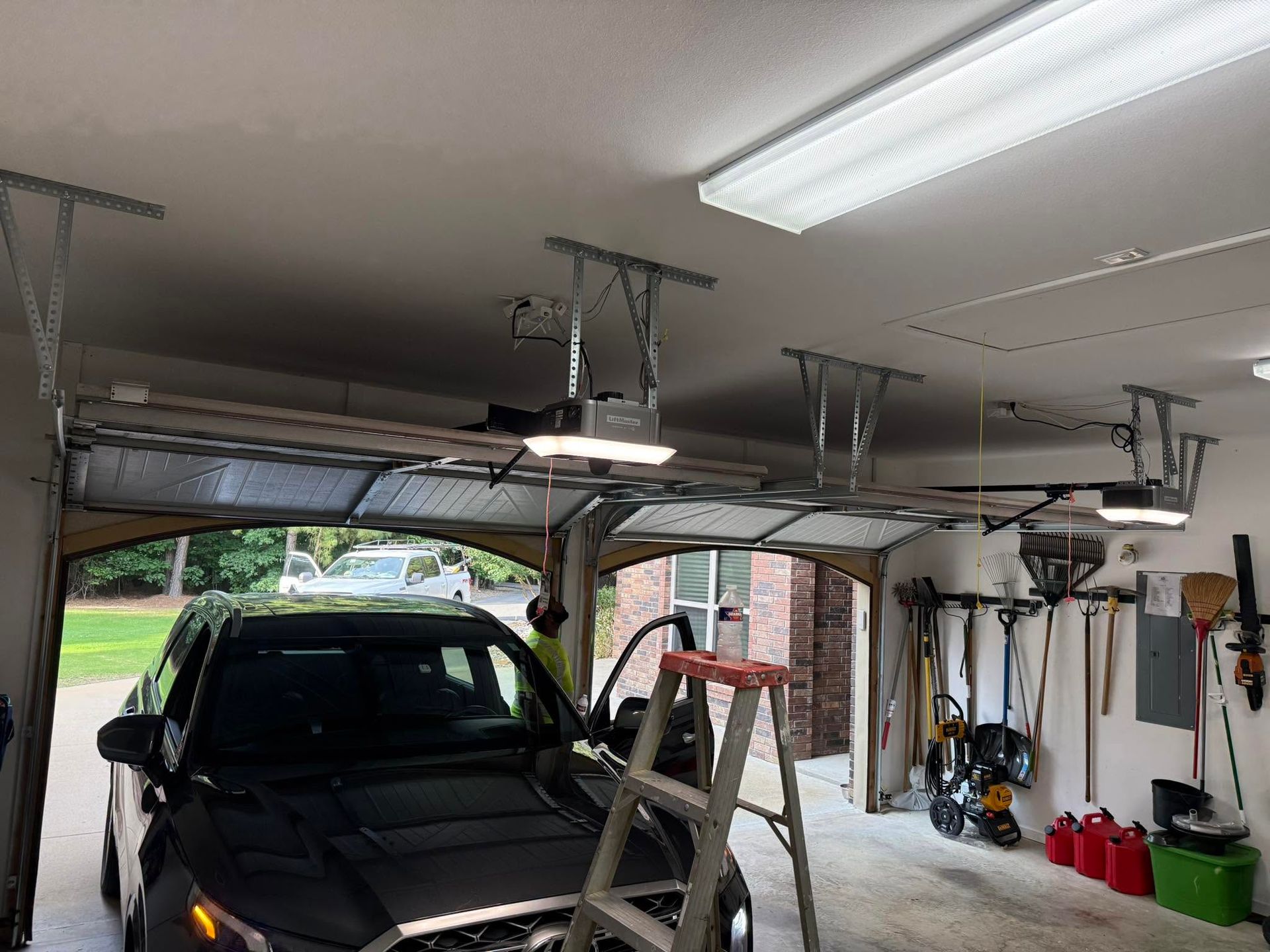
The repair process starts with a full inspection of both track runs, the hangers, bracket fasteners, and roller condition. Many established subdivisions in Benton and Shannon Hills have homes running on their original steel tracks, and those tracks develop specific failure patterns over years of use: the vertical section nearest the floor bends inward from contact with vehicles or shifting framing, and the wall brackets loosen as the fasteners work out of the wood over repeated door cycles. The technician checks that both sides are plumb and level with each other, straightens or replaces bent sections, and re-anchors loose brackets directly into the framing rather than the wall surface alone.
Schedule a track inspection to identify whether the issue is a bent section, a loose bracket, or a combination of both before the rollers take additional wear.
Why Track Alignment Affects the Whole Door System
Overhead door tracks are not simply guides—they carry the full lateral load of the door through its travel arc. When a section of track is bent or a bracket has pulled away from the framing, the roller at that point is forced to push against the track wall rather than roll cleanly along it. That lateral pressure wears the roller stems, creates flat spots on the roller wheels, and puts uneven tension on the lift cables on either side of the door. A door that sounds rough or hesitates at a specific point in its travel almost always traces back to a localized track condition at that height.
After straightening or replacing the damaged track sections and re-anchoring the bracket hardware, the door's travel should be quiet and consistent from bottom to top. Fowler Overhead Doors tests through a complete cycle and checks cable tension on both sides before closing the job, because re-establishing proper track geometry can shift the load balance enough to require a spring adjustment. A door that was previously straining through one section of its travel will move without resistance once the track run is correct.
Commercial overhead doors, including those on storage facilities and municipal buildings, use heavier track gauge and larger bracket hardware than residential doors. Repairs to those systems require matching the track gauge and bracket load rating to the original installation rather than substituting residential-grade components, which is a distinction the technician confirms at the time of inspection.
Answers About How Track Repair Gets Done
Track repair questions usually center on what the inspection covers and what the technician is actually correcting rather than just the visible bend in the rail. These answers address the process directly.
What does a track inspection include beyond looking at the track itself?
The inspection covers the roller condition on both sides, the hanger and bracket fasteners, and whether the tracks are level with each other across the full run. A track that looks visually straight can still be out of plumb relative to the opposite side, which causes the same binding symptoms as a visible bend.
How are loose track brackets re-anchored so they don't pull free again?
Brackets that have worked loose from the wall are re-anchored into the structural framing behind the wall surface rather than the surface material alone. In homes built with standard stud framing, this means locating the framing member and driving fasteners into it at the correct depth for the bracket's load rating.
When does a bent track section need to be replaced rather than straightened?
Sections with a sharp crease or a bend that has caused the track wall to fracture or crack at the radius need replacement because straightening metal at that condition point leaves a stress concentration that will re-fail under load. Minor bows or gradual curves can typically be corrected without swapping the section.
How does a track problem in Benton's older homes differ from a newer construction situation?
Homes in established subdivisions around Benton were often built with tracks fastened into older framing that has dried and shrunk over decades, which loosens fastener grip more readily than it would in a newer structure. Re-anchoring in those homes sometimes requires longer fasteners or a different anchor point than the original installation used.
Why should rollers be checked at the same time as the track?
Rollers that have been running in a misaligned track develop flat spots and worn stems that cause noise and binding even after the track is corrected. Replacing worn rollers at the same service visit prevents the newly straightened track from being damaged again by rollers that no longer roll cleanly.
Fowler Overhead Doors, LLC handles track repair and replacement on residential and commercial doors, with emergency service available for doors that are stuck open or unable to close. Fowler Overhead Doors also repairs garage door tracks in Bryant, Alexander, Bauxite, Haskell, and Shannon Hills. Call (501) 551-5220 to arrange an inspection.